@pancakes Honestly, same! I can't afford it, but I was interested in VR hardware lately, and I thought that something like Quest 3 would be nice, but I hate the online account requirement, but at the same time, my laptop isn't very powerful for PCVR, besides maybe VRChat (which was technically the main reason why I wanted to get a headset, to hang out with Free inside virtual space, since we're separated by the ocean)
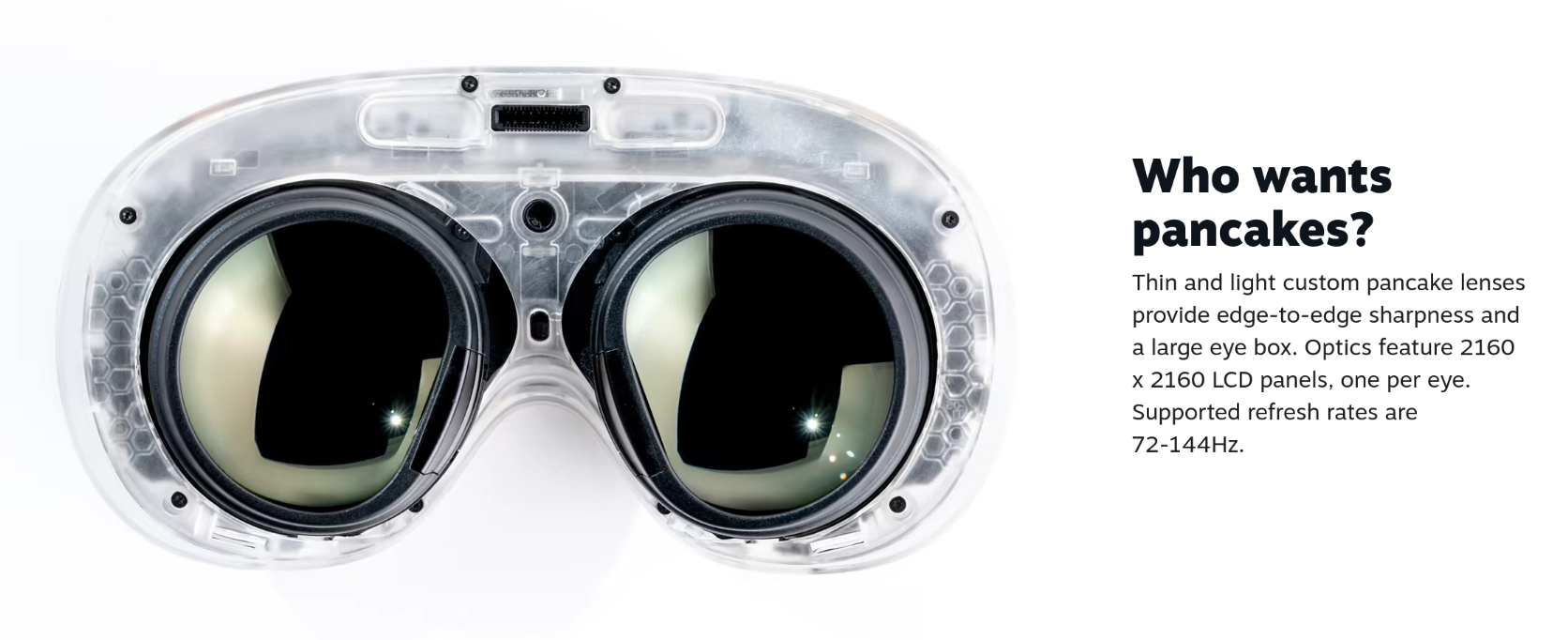
I was honestly just thinking if there was a way to just run Linux on some standalone headsets (you can technically run postmarketOS on a device called Lynx R1, which has pretty much the same chipset as Quest 2, it's just that the Lynx R1 isn't a gaming device, it had more scientific use), so this is literally what I was looking for. A standalone VR headset, running a modern flagship SoC (the Snapdragon Gen 3 is basically the same thing as Quest 3/3s' Snapdragon XR2 Gen 2), with no account requirement (well, I suppose you do need Steam account to buy it, but at least you don't have to have an account just to use it), and it runs Linux, rather than Android
@pancakes Oh, yeah, I remember watching SadlyItsBradley's Deckard leaks years ago. I remember there was mention of them actually prototyping two headsets at the time, one tethered with speakers like on Index, and another one that was meant to be standalone and have a Snapdragon SoC. I was honestly sceptical they're going to go with the ARM-based headset, unless they used Android like any other company that used Snapdragon chipset before, especially that SteamOS is Arch-based, and Arch Linux famously doesn't support ARM. I was even more likely to believe they're just going to shove Steam Deck's APU into it, given the internal codename, but nope, they somehow managed to make a standalone ARM-based headset running Arch Linux


 1
1 1
1
 1
1 1
1